Kamis, 22 April 2010

When Will Chelsea Reach Their Target?


While Chelsea continue to battle Manchester United for the Premier League title that apparently nobody wants to win this season, the club's accounts for the twelve months to June 2009 were submitted to Companies House last week. Not a thrilling read, you might think, and you would be right, but two key points emerged in the detailed notes: first, Chelsea’s wage bill was the highest ever reported by a British football club; second, the players earning these salaries are, in fact, worth a lot less than the year before.

This once again called into question whether Chelsea would ever achieve their frequently stated target of breaking even on their financials. Fans with a good memory will remember that this was part of former chief executive Peter Kenyon’s five-year plan, but even his initial confidence appeared to weaken along the journey, “The 2010 break-even is ambitious. I don’t think it’s something we are postponing, but it’s always been ambitious. We are determined to meet it or get as close as we can.” Of course, this has not overly mattered at Chelsea, given the generosity of their wealthy owner, Roman Abramovich, but it could become a more pressing issue, as the Russian has supposedly started to clamp down on the club’s largesse.

"Man with a plan"

Current chief executive, Ron Gourlay, reiterated the target, though quietly dropped the previous deadline, “It is still our aim to be self-sufficient and we will achieve this by increasing our revenues as we continue to leverage off our brand. We are reducing our costs by controlling expenses, including salaries and wages.” Nothing much wrong with that (apart from the hideous marketing-speak about “leveraging the brand”) - except for a couple of minor caveats. First, it’s all well and good talking about increasing revenue, but it sounds a bit hollow after the club’s revenue has just declined. Also, it’s a bit rich to start talking about controlling salaries after they have reached £150m or, put another way, nearly 25% higher than the next highest wage bill in the Premier League (at Manchester United).

So exactly how close were Chelsea to reaching the promised land of zero profit? The £44.4m loss in the 2009 results was somehow presented as a triumph, purely because it was £21.3m smaller than the prior year. OK, the loss is lower, but it’s still a thumping great loss. Only Manchester City recorded worse figures in 2009 in their first year of (ironically) “doing a Chelsea”. The club’s press release described the revenue as “stable”, which actually meant that it fell £6.7m from £213.1m to 206.4m, reflecting the front-loaded nature of a sponsorship contract. This decrease is attributed to the “economic climate”, but should be a cause of concern when the other members of the Big Four all managed to improve their revenue, especially after a fairly successful season (Premier League runners-up, Champions League semi-finalists and FA Cup winners).

"The only way is up"

To be fair, operating expenses of £263.7m were also down £10.4m, but you could make a case that most of the £21.3m improvement in profits (a.k.a. reduction in losses) was due to non-core activities: profit on player sales was £6.4m higher; amortisation was £8.3m lower, reflecting a slow-down in player purchases; and termination payments to managers and coaches were £10.5m smaller. These severance expenses are described as “exceptional items” in the accounts, suggesting that the underlying loss is much lower, but it’s actually pretty much business as usual for Chelsea, when you see that they have made such payments in three of the last five years (£25.5m in 2005, £23.1m in 2008 and £12.6m in 2009), paying £61.2m to rid themselves of a succession of “failed” managers: Claudio Ranieri, Jose Mourinho, Avram Grant and Luiz Felipe Scolari. That’s a staggering amount, especially if you consider how successful Mourinho and Ranieri have been since leaving Stamford Bridge.

In the trading world, technical analysts are fond of the expression, “the trend is your friend”, and the club’s management are keen to point to losses reducing for four years in a row. Good stuff, but everything’s relative, and the starting point was the record deficit of £140m in 2005. Yes, the losses might be on a downward trend, but they are still enormous by almost anyone else’s standards. Back in 2005, Peter Kenyon talked tough, “Two years ago we were seen as streets paced with gold. That is over. Chelsea is now being run properly. The club is being run as a business.” Four years later, he repeated the message, “This is the fifth set of financial accounts since the takeover and Chelsea has made huge progress during that period as a football club and a business.”

Hmmm. I’m not sure that I would describe the progress as “huge”: in the period described by Kenyon, the losses did fall, but only from £87.9m in 2004 to £65.7m in 2008. Big deal. In fact, much of the improvement over the years has been due to a revised approach to buying and selling players. As Kenyon said, “We have consistently reduced our net transfer spend over the last five years and will continue this trend.” Following the record shortfall in 2005, losses have now reduced by £95.6m (from £140.0m to £44.4m), but almost all of this (£74m, nearly 80%) has come from the transfer market: profit on player sales is £40.4m higher, while amortisation on purchased players is £33.6m lower. Another £12.9m of the reduction is simply because of lower termination payments (£12.6m compared to £25.5m). In other words, only £8.7m of the improvement has come from the underlying business. In an era when television money has significantly increased, that’s an unconvincing performance. Another way of looking at this is to say the revenue growth of £57m has been as near as damn swallowed up by matching cost growth of £53m, leaving a net improvement of just £4m.

The club was also keen to emphasise the improvement in cash flow in the press release accompanying the 2009 accounts, “Disciplined management of capital expenditure has reduced the cash spend from £107.4m down to £16.9m”, largely due to the completion of major projects such as the training centre at Cobham. However, like the profit and loss account, the song remains the same: cash flow might be better, but it is still negative, as it has been for every year of the Abramovich reign. This is, of course, before “financing”, i.e. interest-free loans from the owner. Interestingly, the net cash outflow from operating activities of £13.1m 2009 is exactly the same as it was in 2004 – no progress at all.

"Shining example"

But it’s the wage bill that has hit the headlines for all the wrong reasons. As per Chelsea FC plc’s accounts, total payroll costs (excluding termination payments) increased by £4.5m from £148.5m to £153.0m and may be even higher this year following new deals for the likes of John Terry, Frank Lampard, Petr Cech and Michael Essien. Chelsea had seven players in the recent list of the top 50 highest football salaries by Portuguese agency Futebol Finance, which is more than Real Madrid and big-spending Manchester City and only behind Barcelona. Chelsea started as they meant to go on when the first wage bill of the Abramovich era in 2003-4 of £115.6m was more than twice as much as the year before £55.9m. At the time, Kenyon said that he would set some “aggressive” targets for reducing the payroll, but it’s actually increased since then by more than 30%.

This has resulted in a wages to turnover ratio of 74%, which is admittedly better than a lot of teams in the Premier League, but is worse than Chelsea’s stated target of 55% and is a long way behind Manchester United and Arsenal (excluding property development) with 44% and 46% respectively. So the players are well paid at Chelsea, but the directors don’t do too badly either or at least one director, whose remuneration was £2m in 2009. The accounts do not specify who this is, but it’s presumably Kenyon, given that the same amount was earned in 2008.

At least money can’t buy success. No, strike that, as the current Premier League table shows that actually it can. As we speak, the top three positions are filled by the three teams with the largest wage bills – in exactly the same order. Chelsea pay the most and lead the table, followed by Manchester United with the second largest payroll and then Arsenal whose salaries are third highest. In fact, the top seven places in the Premier League are occupied by the first six teams in the “wages league” plus Tottenham (who are 8th). It appears that there is an almost perfect correlation between wages and league success (at least, this season).

"Can Buy Me Love"

Arsene Wenger has described this as “half cheating”, explaining that, “Professional football is about winning and balancing the budget. I’ve always pleaded for financial fair play.” He continued, “What is not normal is not our wages bill, but their (Chelsea’s) wages bill. That should not be allowed.” It’s a fair point, though critics might argue that it’s a bit steep coming from Arsenal, whose annualised wage bill is now running at around £120m, which is not that far below Chelsea and a long way ahead of most other clubs. However, Wenger’s argument is valid from the perspective of the wages to turnover ratio, namely that clubs should not be permitted to subsidise inflated wage bills by injections from owners, but should cut their cloth according to their revenue.

To Chelsea’s credit, they have already embraced a more prudent approach. Abramovich’s arrival was characterised by a massive spending spree, the likes of which the English game had never seen, but he has been far more frugal in recent seasons. In his first three years at the club, he splashed out almost £400m on buying new players (£170m in the first year alone, when he essentially purchased an entire new team – plus substitutes), but has only spent about a quarter of that (£110m) in the last three years. The last big splurge came back in 2006, including the likes of Ashley Cole, Salomon Kalou and the ultimate vanity purchase Andriy Shevchenko. The only “big” names to arrive last summer were Yuri Zhirkov, Danny Sturridge and Ross Turnbull (on a free).

The new, more cautious strategy has also been witnessed on the other side of the trade: in the first three years, Chelsea made a £6m loss on player sales (partly due to writing-off Adrian Mutu’s contract after his drug test), but have made a £60m profit in the last three years, mainly thanks to the sale of Arjen Robben to Real Madrid and three players to Manchester City (Wayne Bridge, Shaun Wright-Phillips and Tal Ben Haim).

"Praying for money?"

Manager, Carlo Ancelotti, has said that significant funds are available to him if required, but I think that the gentleman “doth protest too much”. In the January transfer window, he said, “Together we take the decision to maintain this squad, because we think this is a good squad. It’s not a question of money. Absolutely not. If it’s necessary to buy players, then we can do it”. Only last week, he was still on message, as he did not see any need for a summer spending spree, “I don’t think it’s necessary for us to spend a lot of money”. He is beginning to sound a lot like Arsene Wenger (“there is money to spend, but at the moment I am very happy with the squad I have”) and Alex Ferguson (“the money’s there if I want to buy someone”).

If a special player like Sergio Aguero or Kaka became available, it is possible that Abramovich would stump up the cash to get him, but it has become evident that the owner is concerned about the size of the club’s wage bill, most obviously with the protracted contract negotiations with the aging Michael Ballack and injury-prone Joe Cole. They could well be allowed to leave the club on free transfers, unless they accept drastically reduced terms.

This revised strategy has been reflected in the players’ valuations. In the balance sheet, intangible assets (basically net book value of the players) have decreased by £65.8m from £143.6m to £77.8m in just twelve months. The accounting treatment might be highly theoretical, but even an “independent” assessment by officers of Chelsea FC has slashed the valuation by £40m from £287m to £247m, based on estimates of what could be realised in the transfer market.

"Ballack gets shirty"

This explains Abramovich’s concerns, as he has been hit by the double whammy of a squad diminishing in value while continuing to command the highest salaries in the country. In terms of cashing in on the players, most of them are well past their sell by date with six players in their thirties when next season starts: Ballack, Drogba, Carvalho, Lampard, Anelka and Malouda (Terry and Ashley Cole are just short at 29). Even though the team may well win the Premier League, this is a team that needs rejuvenation if they are to deliver the Champions League success that Abramovich craves. What is certain is that this will not be funded by player sales – just look at Shevchenko, bought from Milan for £30m in 2006, moved to Dynamo Kiev on a free in 2009. It is not easy for any club to replace many key players at the same time, as Arsenal fans well know, following the break-up of the “Invincibles”.

One route that the Gunners have followed is to develop youth players that can break into the first team, but this has proved difficult for Chelsea to emulate. Frank Arnesen’s academy has hardly been a glittering success and the Dane was strongly criticised by Mourinho for not producing a single player that regularly started for the first eleven since his arrival in 2005. This remark might have been down to politicking by the notorious “Portugeezer”, but there was a tacit admission of failure when over half of the club’s worldwide scouting network was sacked. And that’s without mentioning the “tapping up” accusations.

"Wake-up call"

As we have already seen, the squad rebuilding cannot be financed from profits, for the very good reason that there aren’t any, so it will once again come down to the willingness of the owner to open his wallet. As that man Wenger said, “The only difference is that Abramovich can go out tomorrow and change ten players, because he has the financial potential to do it. But if Chelsea were run like any other club, they couldn’t do it.” Leaving aside the fact that Manchester City can now also do the same, Wenger is right to stress the importance of Abramovich to Chelsea’s fortunes.

The question is whether the Russian is willing to inject even more cash into Chelsea. After all, his personal spending on the club since he took over in 2003 is now over £700m. In the first year, Kenyon said that Abramovich’s purchase was “a serious investment with a long-term business plan”, but the oligarch has had to put his hand in his pocket every year since. Accusations that Abramovich had “lost his interest and enthusiasm” first emerged in 2007 and Mourinho was just the person to rub salt into the wounds after his Inter team eliminated Chelsea in this season’s Champions League, “He is not the same person. Probably he thought it would be easy when he arrived in football.” Not unnaturally, Carlo Ancelotti refuted this, “Roman is very interested, for sure, in his team. He likes football, Chelsea, the players and he wants to know everything – about injuries, the balance of the team, tactics.”

"You don't know what you're doing"

The reality is that Abramovich is still there. Perhaps the best example of his support is that he has converted his loans into equity, effectively making the club free of debt. Last year he halved the club’s debt with a £370m conversion and followed that up with another Christmas present in 2009 by doing the same for the outstanding £340m. When asked whether Abramovich would ever ask for his loans to be repaid in 2007, Peter Kenyon had replied, “As chief executive, I want to pay him back, because that would show we are running this club as a real proper sustainable business.” Although the Russian’s grand gesture made a mockery of these comments, a grateful Chelsea chairman, Bruce Buck, said, “There should now be no doubt as to the owner’s commitment to the club.” This had already been amply demonstrated by the interest-free nature of his loans, meaning that Chelsea paid less than £1m interest last year, compared to the eye-watering £68m at Manchester United, £37m at Liverpool and £20m at Arsenal. That’s what I believe is called a competitive advantage.

Some have commented that the debt conversion would make it easier for Abramovich to sell the club, as an investor would no longer be acquiring a mountain of debt, but that obviously does not imply that the club is on the market. At first glance, the timing does seem rather strange, as it doesn’t really make the club any more secure, unless you believe that Abramovich was thinking of calling in the loans at some stage.

"Good brand values?"

Bruce Buck provided a more likely reason for reducing the club’s debt, which was “to comply with any regulations on debt levels which are being discussed by the football community”. This was his oblique reference to UEFA’s Financial Fair Play initiative, which will come into force for all clubs involved in European competitions from 2012-13. However, it is far from clear whether Abramovich’s actions will be sufficient, as UEFA want to ensure that all clubs break-even and be self-supporting. They have explained that their intention “is to stop clubs making losses consistently, and having a backer to pay them off. That way of funding clubs, from outside owners, inflates players' wages, and too often an owner finds he cannot fund the losses any more and the club is in crisis, (which) is not sustainable for football”.

Therefore, Chelsea do need to explore ways of hitting the elusive break-even target and one route is to increase revenue. The long-term objective was always to turn Chelsea into a global brand (like the franchise that is known as Manchester United). There has been some success in increasing sponsorship revenue, mainly as a result of switching shirt supplier from Umbro to Adidas, but Chelsea’s commercial revenue of £52.8m still lags behind United at £70.0m and £67.7m at Liverpool. Ron Gourlay has spoken about selling naming rights for Stamford Bridge, which might generate an additional £10m a year. There’s obviously room for growth here, but the off-pitch scandals involving “JT” and “Cashley” Cole don’t exactly promote the Chelsea brand.

"Bridge of Sighs"

The club’s capacity to make more match day revenue is constrained by, er, their capacity of 42,000 at Stamford Bridge, which is considerably lower than Old Trafford (76,000) and the Emirates (60,000). Nevertheless, they do get a lot of bang for their buck with revenue of £74.5m, which is much higher than Liverpool’s match day revenue of £42.5m, even though Anfield’s capacity is actually larger with 45,000. They have held prices steady for a couple of seasons, but apparently maximise the corporate revenue. However, their only realistic hope of matching the £100m+ earned by Manchester United and Arsenal would be to move to a larger stadium and that appears to be off the agenda for the moment, as no feasible alternative site has ever been realistically identified.

Broadcasting revenue is already pretty good at £79.1m, second only to Manchester United in England, but may be a bit lower this year after the earlier exit in the Champions League. In line with other teams in the Premier League, Chelsea will benefit from the new agreement on overseas rights, which will deliver an extra £7.5m per annum for the next three years. Apart from this revenue stream (and even this may be endangered in future years by Ofcom’s ruling that Sky should charge less for their sports packages), it is not easy to see how Chelsea can grow their revenue sufficiently to hit break-even. As Deloittes said in their annual review, “the club faces a significant challenge to regain a top five position in our Money League.”

"Still interested?"

Hence, the continued reliance on Roman Abramovich even now, despite Kenyon’s grand five-year plan to reduce dependency on the Russian. This cannot be a sound business model. Even chairman Bruce Buck had to admit, “No matter how much money the man has, and I don’t know how much, at some point he is not going to want to invest more money in the club.” Clearly, Chelsea’s benefactor is not short of a few bob. Last year, his fortune was reported to have declined by 40%, but he was still worth £7 billion according to the Sunday Times Rich List and he must have increased his net worth in 2010 following the stock market recovery. However, even the wealthiest businessman is not invulnerable and Abramovich is currently facing a £2 billion court claim from former business partner Boris Berezovsky. Although it is unlikely that Abramovich would ever abandon the club for financial motives, Chelsea would be in serious strife if he exited stage left – for whatever reason. At the very least they would have to find another source for their borrowing – and might even have to pay standard rates of interest.

So will Chelsea finally manage to break-even? I’m afraid that the answer has to be “yes” and “no”. If you look at the bottom-line loss of £44.4m in 2009, it looks improbable, but it is certainly possible if you consider the narrow profit definition used by Peter Kenyon, “We have set ourselves ambitious targets to be EBITDA (Earnings Before Interest, Taxes, Depreciation and Amortisation) neutral on June 30 2010.” On this basis, Chelsea’s 2009 loss was only £11.4m, so they are in with a fighting chance, though it does bring to mind the old saying about moving the goal posts.

Rabu, 14 April 2010

Why Has Nobody Bought Everton?


While the focus on Merseyside has been on Liverpool, both in terms of their likely failure to qualify for the Champions League and the financial doom and gloom arising from the Hicks and Gillett regime, people seem to have overlooked what is happening at Goodison Park. Not only have Everton recovered very well after a dreadful start to the season, including a memorable dismantling of Manchester United, but they also have issues of their own off the pitch. Their financial problems may not be quite so spectacular, but the fact is that Everton’s business model is bust. Their strategy, for want of a better word, appears to be to run the business at a loss every year in a gamble to achieve success on the pitch and to fund it by steadily increasing their debt. Every now and then, they might accidentally make a profit, but only at the price of selling one of their prize assets, the best/worst example being Wayne Rooney five years ago. From a commercial perspective, it is difficult to see how the club will prosper in the future – unless they find a wealthy benefactor.

That is why leading theatrical producer, “True BlueBill Kenwright, who has been Everton chairman since 2004, formally put the club up for sale in 2008, when he appointed Keith Harris of the investment bank Seymour Pierce as broker, but Everton has effectively been on the market for many years. The reasons are obvious, but Kenwright explained why his “kind of chairmanship” no longer has a future in the rich men’s playground known as the Premier League: “I am a pauper when it comes to other chairman. I want this club to have a billionaire owner, but it’s not me and I apologise it’s not me. Everyone knows this football club needs investment. If I can sell it, it will be sold tomorrow”. If this had not been evident before, it became abundantly clear with the arrival of Sheikh Mansour’s billions at Manchester City, which has starkly highlighted the limited budget available to David Moyes.

"Here comes the sun"

So why has nobody bought Everton? After all, this is a club with a fine tradition, having been winners of the old First Division nine times, the FA Cup (when it meant something) five times and the European Cup-Winners Cup once in 1985. As the song goes, “if you know your history”, but it’s not all old news, as Everton were the last team to break the Big Four stranglehold on Champions League places in 2005, came fifth in the Premiership for the last two seasons and were finalists in the FA Cup only last year. In David Moyes, they also have a very good manager, who Kenwright described as “the most important figure at the club”. It is certainly true that Moyes is responsible for taking the club to the upper echelons of the league, but paradoxically his ability could be considered a strength and weakness, as there is always a risk that he could leave for pastures new. Recently, he appeared to break ranks for the first time, “It’s getting harder to keep up with the Joneses. I want to be involved in a football club which makes progress”.

Even the man tasked with selling the club, Keith Harris, admitted that Everton were not football’s most attractive prospect, “The demographics of Liverpool as a city are not hugely compelling. It is not a very wealthy city. Everton share the city with another club, which arguably has been in the vanguard for the last decade, and they both have a stadium to build. So the economics need a lot of looking at”. They have a loyal, but parochial support, with no identifiable image or brand, which was not helped by the UEFA ban on English clubs in the 80s, which prevented Everton from taking their rightful place in the European Cup.

"I'm reviewing the situation"

In fact, Harris confessed that he was making “no progress at all”, exacerbated by the credit crunch, “It has never been more difficult to find buyers. It's no longer a question of price negotiation - it's should we? People are wondering if now is the time to spend”. Kenwright agreed, “We aren't living in a normal world. I am talking to people every week, but in the last few months it's been 'We want a deal done in the next week' and then you literally don't hear from them again. There's just no money”. That may be true, but it does not take long for hard-nosed financial investors to appreciate that this club simply does not make money. Move along, nothing to see here. They walk away even more quickly once they have noticed the club’s growing debt and realise that they would have to fund the building of a larger stadium.

Ah, the new stadium. Everton had proposed building a new 50,000 capacity ground as part of a retail park in Kirkby, on the outskirts of Liverpool, but in November the government rejected their planning application. This was a real blow to the club, as they had been putting all their energies into this scheme for the last three years. Former chief executive Keith Wyness had gone so far as to describe it as “the deal of the century”, because Tesco were going to pay £52m of the construction costs, leaving Everton to find “only” £78m. Wyness argued that much of this money would have been raised by selling Goodison Park and Bellefield, the club’s former training ground, and charging for naming rights at the new stadium. Any debt would be “easily” serviced from the increased earnings at the larger ground. On the face of it, this rejection seems disastrous, as the supporters have been told, “There is no Plan B”, but now “the book is closed” on Kirkby. Current chief executive Robert Elstone had made this very plain, “If this club is going to compete at the top end of the Premier League, we need a favourable decision”.

"Brave new world?"

This is the third time in 13 years that a proposal for a new ground has come to nothing, but this rebuff might just be a blessing in disguise. Many fans never warmed to the idea of moving to Kirkby, which prompted the formation of the “Keep Everton In Our City” (KEIOC) campaign. Their opposition was explained thus, “This was a location issue. This stadium would have been nine miles outside the city centre, further from a city centre than any other Premier League ground”. Their concerns were shared by Liverpool Council, who would also prefer a central site. A better alternative for the supporters was the proposal to build a new stadium on Liverpool’s prestigious King’s Dock, but that scheme was scrapped when the club failed to raise sufficient money.

Which brings us to the question of how exactly Everton would have funded Kirkby. We’re none the wiser after the planning inquiry, as the club refused to explain how they would meet the construction costs on the grounds (sic) of “commercial sensitivity”. The sale of Goodison is unlikely to make “loadsamoney”, as it is situated in a far from salubrious area with boarded-up terraced houses, while their hopes of redeveloping their former training ground for housing were dashed when the application for planning permission was refused (there’s a trend here). The idea of securing big bucks for naming rights also appears a little far-fetched when you consider the low money paid for shirt sponsorship. If by some miracle the club did manage to cobble together the funds, all it would do is further inhibit their capability to spend money on new players.

"My hands are tied"

On the other hand, a brand new, state of the art stadium (or even planning permission) should “improve the club’s financial position, attract investment and provide more money for the manager”. According to a club spokesman, “Any club which can boast a stadium which is modern, fit for purpose and capable of expansion does represent a more attractive proposition to potential investors”. Indeed, the club’s second largest shareholder, Robert Earl, the Planet Hollywood entrepreneur, said that he would not put further money in until the club had moved to a new stadium. Kenwright explained the economic facts (as Rafa might say), “I don’t want to be the guy that takes the club away from Goodison Park. I would sooner stay here personally, but it is not an option financially”. In the same way that Arsenal had to leave Highbury for the Emirates, Everton need to relocate to a stadium with more commercial opportunities and higher match day revenue.

Something has to be done to boost the club’s revenue, as the profit and loss account looks simply awful. Last year, even when the club reported record turnover of £79.7m (an increase of £4.0m on the previous year) on the back of a pretty successful season, they still suffered a loss of £6.9m. This is nothing new under the sun, as Everton have only managed to record a profit once in the last seven years – and that was only due to Wayne Rooney’s big money transfer to Manchester United in 2005. Since “Wazza” was sacrificed, there have been £27.1m of cumulative losses (2006 - £10.8m, 2007 - £9.4m, 2008 break-even, 2009 - £6.9m). Although revenue has significantly increased over the years, thanks to the arrival of Sky television money, this has been matched by spiralling costs. In 1999 Everton reported a loss of £10.7m on turnover of just £25.6m, so in the last ten years revenue has risen by a remarkable £54.1m, but less impressively this has only produced a slightly smaller loss.

"From Hair to Eternity"

The main reason for the cost growth is player wages, which rose by 10.3% last year alone from £44.5m to £49.1m. This “significant investment in the playing squad” gave rise to a higher wages to turnover ratio of 62%, which is nowhere near the worst in the Premier League, but is far from comfortable, even if the club considers it “appropriate”. On top of the salary levels, headcount is also increasing from 210 to 226 with “players, training and management” rising from 80 to 86. As a small compensation, at least the director’s remuneration, presumably Kenwright’s, has reduced from the £450k average of the last three years to “only” 244k in 2009. However, costs have not been helped by wasting nearly £3m on fees incurred for the design and planning of the failed stadium bid (£1.5m in 2008 plus £1.3m in 2009).

The losses over the years would have been even higher if the club had not been selling players. Over the last five years. £40m has been contributed by what accountants call “profit on disposal of players’ registrations”. The impact was most obvious in 2005 when Rooney’s sale resulted in a net profit of £23.5m, but you can also see its importance in the last two years. The club just broke-even in 2008, thanks to £9.2m profit from player sales, but reported an overall loss of £6.9m in 2009, when the profit from player sales was much lower at £3.8m (principally from the sale of Andrew Johnson to Fulham). This bodes well for next year’s results, which will include the £22m sale of Joleon Lescott to Manchester City.

"Moyes has just been told his budget"

This has not stopped the club buying players and Everton have somehow found £84m in the last five years to improve the squad. This does not include £11.8m of contingent liabilities, which will be payable based on future appearances and loyalty bonuses, which would bring the total to nearly £100m. In the accounts, costs associated with buying a player are capitalised as intangible fixed assets and written-off over the length of the contract, as the assumption is that the player would have no value after his contract expires, since he could then leave on a “free”. As an example, John Heitinga was bought for £6m, so if we assume that was on a 4-year contract, £1.5m costs would be booked to the accounts in each of the next four years. Although costs of buying a player are not fully reflected in the accounts in the year of purchase, over time the amortisation costs can have a real impact, which is what has happened at Everton with these costs rising from £12.3m to £13.0m in 2009. That’s a lot in the context of a £6.9m loss.

Kenwright is quite open about this policy in the annual report, “Once again, every available penny was channelled towards the manager to facilitate the upgrading of the senior squad”. This could be seen in the period covered by the last accounts with the record £15m purchase of Marouane Fellaini. Since then, the bulk of the Lescott money has been spent on Sylvain Distin £5m, John Heitinga £6m and Diniyar Bilyaletdinov £9m, but the tap might be closed for a while, given Moyes’ remarks during the January transfer window, “We will be trying to get some players in January but they will probably all be loans. We won't be buying anyone, we don't have those finances”. That’s one of the problems: the only way that Everton have managed to buy these players is by taking on more debt, but Kenwright himself has admitted, “I can’t go on every year as I have been doing, borrowing for transfer funds for David Moyes”.

"No business like show business"

Net debt did actually increase slightly in 2009 from £36.8m to £37.9m, which is nothing compared to the £237m debt at Liverpool or £716m at Manchester United, but it is meaningful, as the club appears to have no way of paying it off. In July Kenwright admitted, “Our debt is a big debt and a worrying debt. It is manageable because of our performance on the field, but it is too much debt that every year is going to be added to”. The debt largely arises from a £30m 25-year loan arranged by Bear Sterns in 2002, which has the advantage of being long-term with a fixed interest rate of 7.79%, but has contributed towards a net interest charge of £4.1m last year (up from £3.9m). In fact, in return for the £30m loan, Everton will end up repaying £68m. The accounts also reveal one other obvious reason for the club’s need to borrow – they have no cash at bank. Nothing, nada, zilch. Not a surprise, given that the cash flow has been negative for the last four years: 2009 - £1.8m, 2008 - £10.9m, 2007 – 4.7m and 2006 - £5.3m. The last time that the cash flow was positive was 2005, due to, guess what, the Rooney sale.

To be fair, Everton control costs quite well, but their revenue lags way behind other major clubs. The 2009 turnover of £79.7m may have been a record for the Toffees, but it’s significantly lower than the Big Four (Manchester United £279m, Arsenal £224m, Chelsea £206m and Liverpool £185m). Fair enough, they benefit from the riches of the Champions League, but Everton are also a fair bit under their peers (Spurs £113m, Manchester City £87m and Aston Villa £84m). They’re even outperformed by Newcastle £86m – who play in the Championship. How can Everton hope to compete on their level of revenue?

Even where revenue has grown considerably, as with broadcasting increasing from £27m in 2007 to £49m in 2009, this has little to do with the club, being down to the collective Sky Premier League agreement. Everton has a huge dependency on television, more so than other clubs, with 61% of their total revenue coming from this stream, but it just about covers the wage bill. This will further rise in the next three years by at least £7.5m per annum, thanks to the recent agreement on overseas rights, but Everton would have to qualify for the Champions League to earn the really big money (another £25m). This is why we have a number of clubs building up debts in order to reach the heady heights of the top four – but they aren’t all going to get there …

Although the club promised to improve its commercial operations a few years ago, it remains feeble at £9.2m, up just £0.5m from the prior year. As a comparison, Spurs earn £29m commercial revenue. To be fair, the club outsourced its merchandising and catering operations in 2006 and its retail business to Kitbag in 2009, which mean that they receive a lower net income from subcontractors, but even so. Everton boast that their shirt sponsorship deal with Chang is the third longest running in the Premier League, but strangely do not mention where they stand in terms of revenue. It’s definitely a lot less than the deal Liverpool recently signed with Standard Chartered Bank – one promise that Christian Purslow actually has delivered on.

"The Story of the Blues"

But where Everton really fall down is match day revenue, which was only £21.9m last year, even though it rose 7%. It may be even lower next year, following the team’s early exit (4th round) from the FA Cup, though this may be offset by their progress in the Europa League. To place this into context, Manchester United and Arsenal both earn more than £100m from match day revenue, while even Liverpool, whose ground is not much larger than Everton’s, managed to gather £43m.

This is the reason why Everton must still look at other options for their ground. Plan B was always to remain at Goodison Park and refurbish their traditional home, but this really would be a case of making the best of a bad job. Limited by a capacity of only 40,000, which is effectively even lower, due the large number of seats with a restricted view, it also does not possess any quality corporate areas for money-spinning hospitality. The ground itself is hemmed in by Victorian housing (and a church) and supported by an inadequate road network. In short, there is no feasible way of transforming Goodison into a modern stadium.

Even if Kirkby had gone ahead, it would not have generated much additional revenue. A study performed by Deloittes on behalf of Everton estimated a paltry £6m extra a year and that was based on the club almost filling the 50,000 stadium every match. That would represent an appreciable increase from last season’s average attendance of 35,667 (down from 36,904 in 2008), so Everton cannot take for granted an increase in crowds, unlike, say, Tottenham, whose proposed new ground is partly justified by their waiting list of 23,000 for season tickets.

"Show me the money"

Others, including Liverpool Council and KEIOC, believe that an alternative location in the city centre can still be found. Although this would be expensive, the suggestion is that it could be financed by some sort of mortgaging scheme, e.g. selling seats for the next 25 years. The council has also indicated that it would favour a ground-sharing scheme, given the financial troubles of both Liverpool clubs. This has worked well on the continent for many years in Milan and Rome and more recently in the Allianz Arena in Munich, where the stadium glows red when Bayern play, and blue when it’s the turn of 1860. How appropriate. However, some worry that this would be detrimental to Everton’s brand, if they were perceived as the junior partners.

What other assets do Everton have? In short, not many. The balance sheet has been deteriorating for a long time with net assets of £18.5m in 1999 declining to net liabilities of £26.7m ten years later. The club takes great pains to emphasise the long-term nature of their loans, but the net current liabilities are also at a record high of £37.4m. Most of the club’s assets have been sold off (the training ground, the academy at Finch Farm and the Megastore), which also increases costs for higher rents, while Goodison’s value is declining. The only assets left are the players themselves with intangible assets now up to £39.4m. Nothing has been included in the accounts for home grown players, but the horrible truth is that any (financial) value would only be realised if the player were sold. What price a debt reducing, balance sheet strengthening sale of Jack Rodwell to Arsenal or Manchester United for £15m this summer?

"Say Hello, Wave Goodbye"

There appears to be no way out for Everton short of a wealthy patron buying the club, described by the Bundesliga chief executive as “the greater fool theory - some day a greater fool will come and buy the club”. At least, Everton have not sold out to leveraged buy-out vultures like the Glazers or a buffoon like Mike Ashley, but the club deserves somebody more financially astute than Kenwright, who unbelievably stated, “I do not understand why football clubs have such big debts, it is a mystery”. Indeed, some fans are growing suspicious of Kenwright’s numerous claims that he is looking for an investor (“Every name you see that has been out there looking for football clubs, we’ve spoken to them. We’ve had people in the Far East, America, Switzerland, Japan …”). When challenged on this at the 2009 AGM, Kenwright’s incredible response was, “I’m not answering your question. I’m bored with your question”.

Whoever buys the club would need very deep pockets. First, they would have to buy out the directors’ shares (Kenwright 25%, Earl 23%, John Woods 19%), but they would also have to repay the loans, fund a new stadium, pay for new players and inject working capital. Not a very appealing prospect from a financial point of view. Just look at Randy Lerner at Aston Villa: he paid £63m to takeover the club, but has since pumped in another £200m to improve the squad – without spending anything substantial on the stadium.

This is a major issue for Everton, as the other clubs striving to break through the glass ceiling all have rich sponsors (Villa – Lerner, Spurs – Joe Lewis, City – Sheikh Mansour). As Kenwright put it in the annual accounts, “maintaining our progress, continuing to punch above our weight will be very difficult”. He added, “At the end of the day, the club’s finances will be key to everything”. If that is indeed the case, Everton’s fans might have to settle for mid-table mediocrity, unless Moyes can continue to “work miracles”.

Kamis, 08 April 2010

Randy Lerner's Money Talks At Aston Villa


Although some sections of the Aston Villa support have become less enamoured with manager Martin O’Neill recently, there have been very few protests against Randy Lerner, even though American owners are hardly flavour of the month with football fans (especially those in the north west of England). This approval is hardly surprising when you consider Aston Villa’s progress since Lerner replaced “Deadly” Doug Ellis four years ago. From finishing barely above the relegation places in 2006, the club has reached the comparatively giddy heights of 6th place in each of the last two seasons. As O’Neill rather acidly pointed out to the press last week, this season Villa (unluckily) lost the Carling Cup Final and have reached the FA Cup Semi Final, while they still have a chance of qualifying for the Champions League.

However, you only have to look at Manchester United to realise that success on the pitch is no guarantee of an owner’s popularity. The Glazers are universally reviled, despite their team winning all the silverware available during their tenure. The difference with Lerner is that not only has he put his hand in his own pocket, unlike his parsimonious predecessor and his fellow transatlantic owners, but he has also demonstrated great respect for Villa’s traditions. On the financial side, he has invested in new training facilities, kept the price of season tickets low and foregone considerable sponsorship money by opting to advertise the name of a local children’s hospice on the team’s shirts. He has also renovated the historic Holte Hotel near the ground, commissioned a statue of Villa’s pioneering chairman William McGregor and even paid for the 1982 European Cup winning team to parade at Villa Park.

"You don't have to be mad to work here, but it helps"

Former Villa manager, Graham Taylor, has praised the owner, “Lerner, of all the foreign buyers, seems to understand not to interfere; he lets his manager manage”. Lerner probably did not need to get a tattoo of the Aston Villa crest on his ankle to win over the Villa faithful, but it can’t have hurt (well, it probably did, but you know what I mean). A couple of years ago, Dave Woodhall, editor of fanzine “Heroes and Villains” and a Supporters’ Trust board member, gushed, “The fans worship the ground Randy walks on. He can’t do anything wrong. He’s got the common touch and it seems like he genuinely cares”. Heady stuff.

So where does this man of the people come from? You won’t hear much from the owner himself, as he’s been very low-key since assuming control, refusing to do any TV or radio interviews. Good for him, but you do wonder whether it’s because he is afraid of damaging his reputation as a successful businessman, given that his wealth is, not to put too fine a point on it, inherited from his father, Alfred (You Can Call Me) “Al” Lerner, the late chairman of MBNA, formerly the world’s largest independent credit card issuer. Randy was also passed control of the NFL franchise for the Cleveland Browns when his father died in 2002, but the team has consistently been one of the worst in the league, only managing to qualify once for the play-offs under his ownership.

"Silent, but deadly"

OK, let’s give the poor guy a chance to step out of his old man’s shadow: how has he done at Aston Villa? We’ve seen that he’s improved the team’s performance, but how has the club fared off the pitch? Not very well, to be completely candid. The latest accounts (up to 31 May 2009) revealed a record loss of £46.2m, despite increasing turnover by 11% to £84.2m. Maybe this was a blip? Nope, the club also made a loss last year, albeit of “only” £7.3m. Or, put another way, the club’s loss increased by an incredible £38.9m in just twelve months. Frankly, the profit and loss account looks awful. In fact, the loss would have been even higher without the £2.9m “profit on disposal of players’ registrations”, i.e. player sales. This was one of the reasons why the loss was lower in the previous year, as the profit from player sales was higher at £11.8m.

At this point, I should clarify that we are quoting the figures from a company called Reform Acquisitions Limited, which is the parent company for Aston Villa’s five (yes, five!) companies, including Aston Villa FC Limited, whose principal activity is described as “professional football club”, and, confusingly, Aston Villa Football Club Limited, whose principal activity is “commercial and retail operations”. The ultimate holding company is Reform Acquisitions LLC, which is registered in the Good Old US of A, with the controlling party being Mr. R Lerner. God knows why football clubs indulge themselves with such an intricate inter-company structure. It’s not as if football is a particularly complex business. It’s almost as if they want to make it difficult for the average punter to understand what is going on.

"I've just seen the accounts"

However, you don’t have to look too far to identify the main reason for the dramatically higher loss, as the operating expenses jumped by nearly 50% (£34.3m) from £70.8m to £105.1m. The primary driver for this growth was staff costs, which grew by a massive £20.2m from £50.4m to £70.6m in a single year. This was after the 2008 accounts reported that the wage bill had more than doubled to £50m. The accounts say that this “reflects the costs of improved salary packages required to attract top professionals to the football club”. To be fair, it’s worked, as the club has attracted a lot more people with headcount for “players, football management and coaches” significantly growing from 86 to 134, though there is no explanation as to why the club felt it needed to increase its staff by over 50%.

An investigation in The Times last week entitled “Money Game” examined the Premier League clubs’ wages to turnover ratio, revealing Aston Villa to be above UEFA’s recommended upper limit of 70% at 76.8%, but the real figure is actually even worse at 83.7%, as the newspaper used figures from the Aston Villa FC Limited accounts instead of the Reform Acquisitions Limited accounts. This is by no means the worst in the Premiership, but it’s far from ideal, especially as a more comfortable target for a company would be 50%, as opposed to 70%. For example, the ratios for Manchester United and Arsenal (excluding property development) are 44% and 46% respectively.

"Carling Cup - close, but no cigar"

Another reason for the enormous rise in operating expenses can be found in Note 29 on page 31 (the very last page) of the accounts, namely “management charges” of £7.7m that “were incurred from Reform Acquisitions LLC”, i.e. Randy Lerner. This is a strange one, as the accounts do not specify what these charges cover. All we know is that there was no such fee booked in 2008. As at the date when this year’s accounts were published, the amount was described as remaining “outstanding”, so it looks like it has not been paid. Given that the accounts state, “None of the directors received remuneration in relation to their services to the company and the Group”, it looks likely that this is some form of alternative compensation to Lerner, but if it is for just one year, it does seem rather steep.

Of course, the fundamental cause of Villa’s increase in costs is the significant spend in the transfer market. During Lerner’s reign, the club has invested an estimated £125m on new players, though has recouped some £40m from sales, resulting in a net spend of around £85m, which is near enough the figure Martin O’Neill defended last week, “I must stand up for myself somewhere along the way. By the time August comes around, I’ll have been here four years. I’ve invested £80m. That equates to £20m (a year) at the end of it all”. He might not feel that’s much, but it is a lot compared to Villa’s turnover. In a way, the expenditure is understandable following the Ellis era of low investment; especially as it’s clearly an attempt to improve an average squad in order to eventually qualify for the extremely lucrative Champions League.

"Rhapsody in (claret and) blue"

On the other hand, the spending spree of the last two years in particular is clearly not sustainable. The 2009 accounts mention £42.7m “invested in the acquisition of new players”, but it did not stop there, as “the manager continued the development of the team after the year end through the 2009 summer transfer window by acquiring the registration of seven new players and releasing several players to other clubs”. This resulted in an additional net spend of £29.4m. So, despite selling Gareth Barry to Manchester City, Zat Knight to Bolton and Craig Gardner to Birmingham for a combined total of around £20m, the net spend was almost £30m, implying that the cost of buying the new players was around £50m. Gulp, that’s a lot of money for the likes of Stewart Downing, Richard Dunne, James Collins, Stephen Warnock, Fabian Delph and Habib Beye (“Sunday, Monday, …”).

Whatever the merits of these players, it is certain that next year’s wage bill will be even higher than the £70m reported in the latest accounts, as that did not include any of the players who signed last summer. In fact, it would have been higher anyway, because of the full year effect of players bought in between June 2008 and May 2009, but heaven knows what it will be after this “supermarket sweep”. This is probably why the accounts specifically mention this policy as a financial risk: “The acquisition of players and their related payroll are deemed a core activity risk and, while assisting the manager in improving the playing squad, the directors are mindful of the pitfalls that are inherent in this area of the business”. One piece of good news on these transfers is a low contingent liability of £2.0m, which is for “the payment of additional amounts upon the fulfillment of specific conditions in the future”, e.g. number of appearances, international caps, etc. On the other hand, this could indicate poor negotiation skills, as it implies that the upfront payments are higher than they might be.

"A winning smile?"

Apart from an increase in salary costs, buying new players also impacts the profits via higher amortisation. This is a result of the accounting treatment for players, whereby the transfer fee payable and any associated costs are capitalised and amortised (written-off) over the term of the player’s contract. For example, Stewart Downing was bought for £12m on a four-year contract, so his amortisation cost is £3m a year. Indeed, amortisation costs rose from £17.8m to £22.9m in 2009. On the flip side, the players are treated as assets in the accounts, so have strengthened the balance sheet with intangible assets increasing from £38.7m to £57.3m.

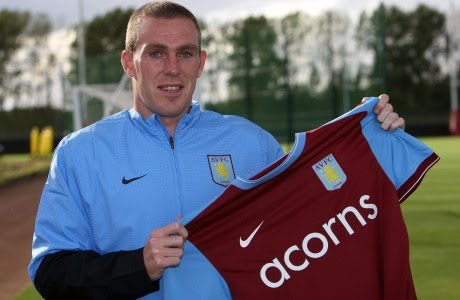
Never mind the losses, here’s the owner. The argument goes that it does not matter if the club makes losses, so long as it is supported by Randy Lerner. This point was developed by Lerner’s right-hand man, the wonderfully named General Krulak (who sounds like he should be a character in the Teenage Mutant Ninja Turtles, but is actually a respected former Marine), when he commented on the latest accounts, “Everyone needs to relax a bit. Football is a business and like any business that you want to get moving, you need to make investments. That is what we have done. We expected to be in the red at this time and are not surprised at all. We knew about the wage bill costs, we knew what we were doing when we had Acorns as our sponsor, we knew what we were doing when we brought in a large number of players, etc, etc. No one should worry or be concerned. We are going to be fine”. Okey-dokey, after that, at least nobody should feel like chanting, “You don’t know what you’re doing”.

"Glory Days"

It’s certainly true that Lerner has put his money where his mouth is. By my reckoning, he has invested almost £270m in Aston Villa to date, comprising £62.6m for the initial takeover, followed by £108m in equity and £97m in loans. The 2009 accounts list the equity (fully paid share capital) as £95.5m and debt (loan notes) as £84.5m, but Note 29 listing events after the balance sheet date also mentions increases in the nominal capital and loan notes of £10m on 28 August (£5m each) and £15m on 14 October (£7.5m each). However, unlike many other owners, the financing has not gone towards improving the ground, either through expansion or building a new stadium, but rather on providing the manager with funds to sign a new squad of players on substantially higher wages.

Of course, everyone in the world of football seems to be concerned with debt these days, so most attention is inevitably focused on this part of the balance sheet. Aston Villa’s reported net debt has increased by 18% from £72.3m to £85.2m, though this would be nearly £100m if the post balance sheet loan notes of £12.5m were included. The net debt as at 31 May 2009 comprises £84.5m loan notes and £9.2m of bank loans and overdrafts less £8.5m cash. Although the debt is getting larger, it still looks reasonable compared to Manchester United, as it’s much lower (£100m vs £716m) and, in stark contrast to the Glazers, is financed from Lerner’s own company, rather than banks. However, it is high compared to most other clubs in the Premier League. According to The Times review, only four clubs have more debt than Villa: obviously Manchester United, Liverpool and Arsenal, but also (worrying drum roll) Portsmouth.

"Stars in their eyes"

The interest charged on the debt is at a standard rate of LIBOR plus 2%, which is currently very low at below 3%, but it should be noted that if LIBOR rose to 5%, then the club would have to pay 7%. The accounts report £5.7m interest payable, including £4.5m on the loan notes (which goes to Lerner) and £0.8m on bank loans. This may not seem much, but it does represent about 5% of revenue. If that is added to Reform Acquisition Limited’s £7.7m management fees, then you could argue that Lerner took out nearly 15% of revenue, which would be excessive if repeated every year. So Lerner’s approach is rather more hard-nosed than has been reported in the media. This is not necessarily a bad thing, even though some clubs are lucky enough to have owners who do not charge interest on their loans (Stoke City and Fulham, to name but two). All I am saying here is that Lerner is not quite the saint that some Villa fans would seem to believe.

Anyone with a basic understanding of accounting will know that accounts can be presented in a number of ways, but you can’t really argue with the cash flow. If a club gets this wrong, it ends up not paying players or even worse those unfriendly folk at Her Majesty’s Revenue and Customs, which potentially will give you your day in court. In short, cash is extremely important, right? This is where Aston Villa’s accounts give most cause for concern. Even though cash has increased in the last two years, this is only after taking Lerner’s financing into consideration. In 2009, if you exclude the £70m financing (£35m loan notes plus £35m shares issued), there was a cash outflow of £47.9m. This negative cash flow would be even worse if creditors had not increased by £19.1m, which could be for a number of reasons, including paying suppliers more slowly.

"Gaining ground"

Does this really matter? Well, yes it does, according to UEFA, or more specifically their Financial Fair Play initiative, which will come into force for all clubs involved in European competitions from 2012-13, ensuring that all clubs break-even and be self-supporting. UEFA explained this thus, “It is to stop clubs making losses consistently, and having a backer to pay them off. That way of funding clubs, from outside owners, inflates players' wages, and too often an owner finds he cannot fund the losses any more and the club is in crisis. Only the English Premier League clubs, and clubs in Italy, have this sugar daddy model, and it is not sustainable for football”. It would be horribly ironic if Villa were finally to qualify for the Champions League and then not be allowed to compete, as they did not satisfy the financial regulations.

Given that they have just reported a massive loss of £46m, how on earth could they reach break-even? At the risk of sounding like Sybil Fawlty (“specialist subject – the bleeding obvious”), they would have to either increase revenue or cut costs. On the revenue side, it’s not all gloom and doom, as the club appears to have much leeway to raise more cash. At £84m, Aston Villa’s revenue is a long way behind other major teams according to the Deloittes Money League 2010 (Manchester United £279m, Arsenal £224m, Chelsea £206m and Liverpool £185m). OK, you would expect the Big Four with the benefit of Champions League TV money to earn a lot more, but even Tottenham have revenue of £113m – nearly £30m more than Villa.

"Experienced centre-half or an intangible asset?"

The club’s ticket prices are notoriously low, so it might be possible to charge an additional £100 or so a season, which would not be enormously popular, but could bring in an additional £5m – though I accept that average attendances and season ticket sales have fallen at Aston Villa. The shirt sponsorship that is currently donated could be charged on a commercial basis, which could be worth up to £15m a season (based on Liverpool’s reputed £20m deal with Standard Chartered Bank). Of course, most football revenue comes from television these days and Villa are no exception with almost 60% (£49m) of their turnover sourced from broadcasting. We already know that each Premier League club will benefit by an additional £7.5m per annum from the recent overseas rights deal, but the really big windfall would only arise from Champions League qualification, which is worth at least £25m a season. Of course, Villa could always sell more players …

The other alternative is to clamp down on the spending and there is some evidence that that is just what is happening. After many years of being backed to the hilt in his frequent forays into the transfer market, Martin O’Neill had to admit in the January transfer window, “We are not looking at players at this minute, because we have to sell. Do I have to sell to buy? We wouldn’t be the only club in that position”. This must be causing a degree of friction between manager and owner, even though General Krulak rushed to smooth down any ruffled feathers, “Both Randy and Martin are on the same sheet of music and both know where the club needs to go”.

"What more can I do?"

The elephant in the room is what would happen to the club if Randy Lerner decided to take his ball away? Martin O’Neill, for one, does not believe that Lerner would leave, “Aston Villa is not a plaything for Randy Lerner. He's really genuine about this club. As far as I can see, he has absolutely no intention of selling the club to make a profit”. Of course, Harry Redknapp said similar complimentary things about Sacha Gaydamak at Portsmouth and look what happened to them once the moneymen withdrew. Lerner does appear to be the real deal with his wealth estimated at $1.5 bln, but it’s not beyond the realms of possibility, especially if he chooses to spend more time with the under-performing Cleveland Browns. What would then happen to the interest payments and debt?

Lerner’s apparent strategy of splashing out a lot of money on new players in order to reach the promised land of the Champions League is a bit of a gamble, to say the least, but the problem is that if he does not invest in improving the squad, Aston Villa are almost certain not to qualify. Damned if you do, damned if you don’t. That’s why Randy Lerner could be considered both a hero and a villain.