Kamis, 08 April 2010

Randy Lerner's Money Talks At Aston Villa


Although some sections of the Aston Villa support have become less enamoured with manager Martin O’Neill recently, there have been very few protests against Randy Lerner, even though American owners are hardly flavour of the month with football fans (especially those in the north west of England). This approval is hardly surprising when you consider Aston Villa’s progress since Lerner replaced “Deadly” Doug Ellis four years ago. From finishing barely above the relegation places in 2006, the club has reached the comparatively giddy heights of 6th place in each of the last two seasons. As O’Neill rather acidly pointed out to the press last week, this season Villa (unluckily) lost the Carling Cup Final and have reached the FA Cup Semi Final, while they still have a chance of qualifying for the Champions League.

However, you only have to look at Manchester United to realise that success on the pitch is no guarantee of an owner’s popularity. The Glazers are universally reviled, despite their team winning all the silverware available during their tenure. The difference with Lerner is that not only has he put his hand in his own pocket, unlike his parsimonious predecessor and his fellow transatlantic owners, but he has also demonstrated great respect for Villa’s traditions. On the financial side, he has invested in new training facilities, kept the price of season tickets low and foregone considerable sponsorship money by opting to advertise the name of a local children’s hospice on the team’s shirts. He has also renovated the historic Holte Hotel near the ground, commissioned a statue of Villa’s pioneering chairman William McGregor and even paid for the 1982 European Cup winning team to parade at Villa Park.

"You don't have to be mad to work here, but it helps"

Former Villa manager, Graham Taylor, has praised the owner, “Lerner, of all the foreign buyers, seems to understand not to interfere; he lets his manager manage”. Lerner probably did not need to get a tattoo of the Aston Villa crest on his ankle to win over the Villa faithful, but it can’t have hurt (well, it probably did, but you know what I mean). A couple of years ago, Dave Woodhall, editor of fanzine “Heroes and Villains” and a Supporters’ Trust board member, gushed, “The fans worship the ground Randy walks on. He can’t do anything wrong. He’s got the common touch and it seems like he genuinely cares”. Heady stuff.

So where does this man of the people come from? You won’t hear much from the owner himself, as he’s been very low-key since assuming control, refusing to do any TV or radio interviews. Good for him, but you do wonder whether it’s because he is afraid of damaging his reputation as a successful businessman, given that his wealth is, not to put too fine a point on it, inherited from his father, Alfred (You Can Call Me) “Al” Lerner, the late chairman of MBNA, formerly the world’s largest independent credit card issuer. Randy was also passed control of the NFL franchise for the Cleveland Browns when his father died in 2002, but the team has consistently been one of the worst in the league, only managing to qualify once for the play-offs under his ownership.

"Silent, but deadly"

OK, let’s give the poor guy a chance to step out of his old man’s shadow: how has he done at Aston Villa? We’ve seen that he’s improved the team’s performance, but how has the club fared off the pitch? Not very well, to be completely candid. The latest accounts (up to 31 May 2009) revealed a record loss of £46.2m, despite increasing turnover by 11% to £84.2m. Maybe this was a blip? Nope, the club also made a loss last year, albeit of “only” £7.3m. Or, put another way, the club’s loss increased by an incredible £38.9m in just twelve months. Frankly, the profit and loss account looks awful. In fact, the loss would have been even higher without the £2.9m “profit on disposal of players’ registrations”, i.e. player sales. This was one of the reasons why the loss was lower in the previous year, as the profit from player sales was higher at £11.8m.

At this point, I should clarify that we are quoting the figures from a company called Reform Acquisitions Limited, which is the parent company for Aston Villa’s five (yes, five!) companies, including Aston Villa FC Limited, whose principal activity is described as “professional football club”, and, confusingly, Aston Villa Football Club Limited, whose principal activity is “commercial and retail operations”. The ultimate holding company is Reform Acquisitions LLC, which is registered in the Good Old US of A, with the controlling party being Mr. R Lerner. God knows why football clubs indulge themselves with such an intricate inter-company structure. It’s not as if football is a particularly complex business. It’s almost as if they want to make it difficult for the average punter to understand what is going on.

"I've just seen the accounts"

However, you don’t have to look too far to identify the main reason for the dramatically higher loss, as the operating expenses jumped by nearly 50% (£34.3m) from £70.8m to £105.1m. The primary driver for this growth was staff costs, which grew by a massive £20.2m from £50.4m to £70.6m in a single year. This was after the 2008 accounts reported that the wage bill had more than doubled to £50m. The accounts say that this “reflects the costs of improved salary packages required to attract top professionals to the football club”. To be fair, it’s worked, as the club has attracted a lot more people with headcount for “players, football management and coaches” significantly growing from 86 to 134, though there is no explanation as to why the club felt it needed to increase its staff by over 50%.

An investigation in The Times last week entitled “Money Game” examined the Premier League clubs’ wages to turnover ratio, revealing Aston Villa to be above UEFA’s recommended upper limit of 70% at 76.8%, but the real figure is actually even worse at 83.7%, as the newspaper used figures from the Aston Villa FC Limited accounts instead of the Reform Acquisitions Limited accounts. This is by no means the worst in the Premiership, but it’s far from ideal, especially as a more comfortable target for a company would be 50%, as opposed to 70%. For example, the ratios for Manchester United and Arsenal (excluding property development) are 44% and 46% respectively.

"Carling Cup - close, but no cigar"

Another reason for the enormous rise in operating expenses can be found in Note 29 on page 31 (the very last page) of the accounts, namely “management charges” of £7.7m that “were incurred from Reform Acquisitions LLC”, i.e. Randy Lerner. This is a strange one, as the accounts do not specify what these charges cover. All we know is that there was no such fee booked in 2008. As at the date when this year’s accounts were published, the amount was described as remaining “outstanding”, so it looks like it has not been paid. Given that the accounts state, “None of the directors received remuneration in relation to their services to the company and the Group”, it looks likely that this is some form of alternative compensation to Lerner, but if it is for just one year, it does seem rather steep.

Of course, the fundamental cause of Villa’s increase in costs is the significant spend in the transfer market. During Lerner’s reign, the club has invested an estimated £125m on new players, though has recouped some £40m from sales, resulting in a net spend of around £85m, which is near enough the figure Martin O’Neill defended last week, “I must stand up for myself somewhere along the way. By the time August comes around, I’ll have been here four years. I’ve invested £80m. That equates to £20m (a year) at the end of it all”. He might not feel that’s much, but it is a lot compared to Villa’s turnover. In a way, the expenditure is understandable following the Ellis era of low investment; especially as it’s clearly an attempt to improve an average squad in order to eventually qualify for the extremely lucrative Champions League.

"Rhapsody in (claret and) blue"

On the other hand, the spending spree of the last two years in particular is clearly not sustainable. The 2009 accounts mention £42.7m “invested in the acquisition of new players”, but it did not stop there, as “the manager continued the development of the team after the year end through the 2009 summer transfer window by acquiring the registration of seven new players and releasing several players to other clubs”. This resulted in an additional net spend of £29.4m. So, despite selling Gareth Barry to Manchester City, Zat Knight to Bolton and Craig Gardner to Birmingham for a combined total of around £20m, the net spend was almost £30m, implying that the cost of buying the new players was around £50m. Gulp, that’s a lot of money for the likes of Stewart Downing, Richard Dunne, James Collins, Stephen Warnock, Fabian Delph and Habib Beye (“Sunday, Monday, …”).

Whatever the merits of these players, it is certain that next year’s wage bill will be even higher than the £70m reported in the latest accounts, as that did not include any of the players who signed last summer. In fact, it would have been higher anyway, because of the full year effect of players bought in between June 2008 and May 2009, but heaven knows what it will be after this “supermarket sweep”. This is probably why the accounts specifically mention this policy as a financial risk: “The acquisition of players and their related payroll are deemed a core activity risk and, while assisting the manager in improving the playing squad, the directors are mindful of the pitfalls that are inherent in this area of the business”. One piece of good news on these transfers is a low contingent liability of £2.0m, which is for “the payment of additional amounts upon the fulfillment of specific conditions in the future”, e.g. number of appearances, international caps, etc. On the other hand, this could indicate poor negotiation skills, as it implies that the upfront payments are higher than they might be.

"A winning smile?"

Apart from an increase in salary costs, buying new players also impacts the profits via higher amortisation. This is a result of the accounting treatment for players, whereby the transfer fee payable and any associated costs are capitalised and amortised (written-off) over the term of the player’s contract. For example, Stewart Downing was bought for £12m on a four-year contract, so his amortisation cost is £3m a year. Indeed, amortisation costs rose from £17.8m to £22.9m in 2009. On the flip side, the players are treated as assets in the accounts, so have strengthened the balance sheet with intangible assets increasing from £38.7m to £57.3m.

Never mind the losses, here’s the owner. The argument goes that it does not matter if the club makes losses, so long as it is supported by Randy Lerner. This point was developed by Lerner’s right-hand man, the wonderfully named General Krulak (who sounds like he should be a character in the Teenage Mutant Ninja Turtles, but is actually a respected former Marine), when he commented on the latest accounts, “Everyone needs to relax a bit. Football is a business and like any business that you want to get moving, you need to make investments. That is what we have done. We expected to be in the red at this time and are not surprised at all. We knew about the wage bill costs, we knew what we were doing when we had Acorns as our sponsor, we knew what we were doing when we brought in a large number of players, etc, etc. No one should worry or be concerned. We are going to be fine”. Okey-dokey, after that, at least nobody should feel like chanting, “You don’t know what you’re doing”.

"Glory Days"

It’s certainly true that Lerner has put his money where his mouth is. By my reckoning, he has invested almost £270m in Aston Villa to date, comprising £62.6m for the initial takeover, followed by £108m in equity and £97m in loans. The 2009 accounts list the equity (fully paid share capital) as £95.5m and debt (loan notes) as £84.5m, but Note 29 listing events after the balance sheet date also mentions increases in the nominal capital and loan notes of £10m on 28 August (£5m each) and £15m on 14 October (£7.5m each). However, unlike many other owners, the financing has not gone towards improving the ground, either through expansion or building a new stadium, but rather on providing the manager with funds to sign a new squad of players on substantially higher wages.

Of course, everyone in the world of football seems to be concerned with debt these days, so most attention is inevitably focused on this part of the balance sheet. Aston Villa’s reported net debt has increased by 18% from £72.3m to £85.2m, though this would be nearly £100m if the post balance sheet loan notes of £12.5m were included. The net debt as at 31 May 2009 comprises £84.5m loan notes and £9.2m of bank loans and overdrafts less £8.5m cash. Although the debt is getting larger, it still looks reasonable compared to Manchester United, as it’s much lower (£100m vs £716m) and, in stark contrast to the Glazers, is financed from Lerner’s own company, rather than banks. However, it is high compared to most other clubs in the Premier League. According to The Times review, only four clubs have more debt than Villa: obviously Manchester United, Liverpool and Arsenal, but also (worrying drum roll) Portsmouth.

"Stars in their eyes"

The interest charged on the debt is at a standard rate of LIBOR plus 2%, which is currently very low at below 3%, but it should be noted that if LIBOR rose to 5%, then the club would have to pay 7%. The accounts report £5.7m interest payable, including £4.5m on the loan notes (which goes to Lerner) and £0.8m on bank loans. This may not seem much, but it does represent about 5% of revenue. If that is added to Reform Acquisition Limited’s £7.7m management fees, then you could argue that Lerner took out nearly 15% of revenue, which would be excessive if repeated every year. So Lerner’s approach is rather more hard-nosed than has been reported in the media. This is not necessarily a bad thing, even though some clubs are lucky enough to have owners who do not charge interest on their loans (Stoke City and Fulham, to name but two). All I am saying here is that Lerner is not quite the saint that some Villa fans would seem to believe.

Anyone with a basic understanding of accounting will know that accounts can be presented in a number of ways, but you can’t really argue with the cash flow. If a club gets this wrong, it ends up not paying players or even worse those unfriendly folk at Her Majesty’s Revenue and Customs, which potentially will give you your day in court. In short, cash is extremely important, right? This is where Aston Villa’s accounts give most cause for concern. Even though cash has increased in the last two years, this is only after taking Lerner’s financing into consideration. In 2009, if you exclude the £70m financing (£35m loan notes plus £35m shares issued), there was a cash outflow of £47.9m. This negative cash flow would be even worse if creditors had not increased by £19.1m, which could be for a number of reasons, including paying suppliers more slowly.

"Gaining ground"

Does this really matter? Well, yes it does, according to UEFA, or more specifically their Financial Fair Play initiative, which will come into force for all clubs involved in European competitions from 2012-13, ensuring that all clubs break-even and be self-supporting. UEFA explained this thus, “It is to stop clubs making losses consistently, and having a backer to pay them off. That way of funding clubs, from outside owners, inflates players' wages, and too often an owner finds he cannot fund the losses any more and the club is in crisis. Only the English Premier League clubs, and clubs in Italy, have this sugar daddy model, and it is not sustainable for football”. It would be horribly ironic if Villa were finally to qualify for the Champions League and then not be allowed to compete, as they did not satisfy the financial regulations.

Given that they have just reported a massive loss of £46m, how on earth could they reach break-even? At the risk of sounding like Sybil Fawlty (“specialist subject – the bleeding obvious”), they would have to either increase revenue or cut costs. On the revenue side, it’s not all gloom and doom, as the club appears to have much leeway to raise more cash. At £84m, Aston Villa’s revenue is a long way behind other major teams according to the Deloittes Money League 2010 (Manchester United £279m, Arsenal £224m, Chelsea £206m and Liverpool £185m). OK, you would expect the Big Four with the benefit of Champions League TV money to earn a lot more, but even Tottenham have revenue of £113m – nearly £30m more than Villa.
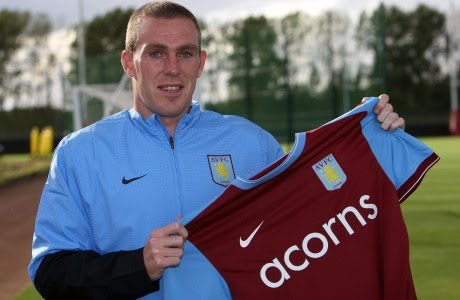
"Experienced centre-half or an intangible asset?"

The club’s ticket prices are notoriously low, so it might be possible to charge an additional £100 or so a season, which would not be enormously popular, but could bring in an additional £5m – though I accept that average attendances and season ticket sales have fallen at Aston Villa. The shirt sponsorship that is currently donated could be charged on a commercial basis, which could be worth up to £15m a season (based on Liverpool’s reputed £20m deal with Standard Chartered Bank). Of course, most football revenue comes from television these days and Villa are no exception with almost 60% (£49m) of their turnover sourced from broadcasting. We already know that each Premier League club will benefit by an additional £7.5m per annum from the recent overseas rights deal, but the really big windfall would only arise from Champions League qualification, which is worth at least £25m a season. Of course, Villa could always sell more players …

The other alternative is to clamp down on the spending and there is some evidence that that is just what is happening. After many years of being backed to the hilt in his frequent forays into the transfer market, Martin O’Neill had to admit in the January transfer window, “We are not looking at players at this minute, because we have to sell. Do I have to sell to buy? We wouldn’t be the only club in that position”. This must be causing a degree of friction between manager and owner, even though General Krulak rushed to smooth down any ruffled feathers, “Both Randy and Martin are on the same sheet of music and both know where the club needs to go”.

"What more can I do?"

The elephant in the room is what would happen to the club if Randy Lerner decided to take his ball away? Martin O’Neill, for one, does not believe that Lerner would leave, “Aston Villa is not a plaything for Randy Lerner. He's really genuine about this club. As far as I can see, he has absolutely no intention of selling the club to make a profit”. Of course, Harry Redknapp said similar complimentary things about Sacha Gaydamak at Portsmouth and look what happened to them once the moneymen withdrew. Lerner does appear to be the real deal with his wealth estimated at $1.5 bln, but it’s not beyond the realms of possibility, especially if he chooses to spend more time with the under-performing Cleveland Browns. What would then happen to the interest payments and debt?

Lerner’s apparent strategy of splashing out a lot of money on new players in order to reach the promised land of the Champions League is a bit of a gamble, to say the least, but the problem is that if he does not invest in improving the squad, Aston Villa are almost certain not to qualify. Damned if you do, damned if you don’t. That’s why Randy Lerner could be considered both a hero and a villain.

Rabu, 31 Maret 2010

Are Tottenham’s Results Too Good To Be True?


After many years of disappointment, Tottenham Hotspur are going great guns this season, threatening to break the stranglehold of the so-called Big Four and qualify for the Champions League. However well they have played so far, I suspect that even the staunchest Spurs fans do not entirely trust their team to finish in fourth place, especially as they have an incredibly tough run-in featuring matches against Manchester United, Chelsea, Manchester City and their North London rivals Arsenal. I have no idea whether or not they will fall at the final fence, but in any case I am more concerned with their financial results.

The media acclaimed last year’s tremendous profits with chairman Daniel Levy boasting, “The robust and well financed nature of our business, early prudent financial management measures, profitable player trading and the continued, unwavering loyalty of our supporters has meant that we are able to announce a record profit before tax of £33.4m for the year”. Given the financial Armageddon afflicting Portsmouth and the challenges posed to Manchester United and Liverpool by their debt mountains, this is no mean feat, but, as always, the devil is in the detail.

"I make Tottenham shareholders big profit"

Yes, the annual profit of £33.4m (to 30 June 2009) was considerably higher than the £3.0m reported in 2008, but this was hugely influenced by the £56.5m profit on disposal of intangible assets – or gains made from the sales of players, as most people would put it, including the big money moves of Dimitar Berbatov to Manchester United and Robbie Keane to Liverpool. Excluding these once-off sales, Tottenham would actually have reported a loss of £23.1m. The reality is that you’re unlikely to make that much money from transfers every year, which was underlined in Tottenham’s next set of accounts, the recent interim results (to 31 December 2009), when they reported a loss before tax of £8.3m. Strangely, the press release opted to highlight the profit from operations before football trading and amortisation, which was “consistent with the same period last year at £4.9m”, instead of the loss. It’s almost as if they want to emphasise the good news, while glossing over the bad news …

The £8.3m loss arose even after Tottenham still made money from player trading, albeit only £9.4m. This was much lower than the £53.4m made in the corresponding period last year, which included £23.4m for Berbatov, £17.5m for Keane and £7.3m for the sale of three players to Sunderland (Steed Malbranque, Teemu Tainio and Pascal Chimbonda). It should be noted that profit from player trading is the price paid to Tottenham by the buying club less the value reported in Tottenham’s accounts, so not all of the transfer fee received is booked as profit.

"What's my net book value?"

Unfortunately we now need to get a little technical in order to understand the concept of amortisation, which is how accountants reduce the value of assets over time. In this case, we mean footballers. At the end of a player’s contract, accountants consider that a player has no value, as he is allowed to leave the club on a free transfer. It’s probably easier to comprehend with an example. Spurs bought Sebastien Bassong for £8m, so if we assume that his contract is for four years, then the annual amortisation would be £2m. After two years his net book value in the accounts would be £4m (the original cost of £8m less two years amortisation at £2m per annum). So, if Bassong were sold at that point for £10m, the accounts would show a profit of £6m, i.e. £10m sales proceeds less £4m net book value. Alles klar?

In Tottenham’s accounts, amortisation expenses have significantly increased over the last four years from £11.8m in 2006 to £38.1m in 2009, reflecting “the continued investment in the club’s playing squad”. It is no different in the recent interims with £20.0m being reported – up from £16.2m the previous year. This is the main reason for the pre-tax loss of £8.3m, as operating profits of £4.9m have been boosted by £9.4m from player sales, but totally wiped out by the £20.0m amortisation – and the £2.5m net finance costs, but we will address debt later.

"Not much to crow about"

Even if we remove amortisation and profit from player sales from the equation and just focus on the operating profit, there are two sides to the story. Yes, healthy profits are being made (£18.4m in the 2009 annual accounts), but the profit has been falling in the last two years: from £27.5m in 2008 and £29.7m in 2007. This is despite the club taking “pre-emptive steps of reducing our operating costs in advance of the downturn in the economy”, which, to be fair, cut operating expenses from £50.0m to £48.6m in the interims, despite an increase in player-related costs. Having said that, over the last few years the club has blown millions on the management merry-go-round, being contractually obliged to make substantial pay-offs to Martin Jol and Juande Ramos and pay £5m compensation to Portsmouth for Harry Redknapp’s services.

All the wheeler dealing in the transfer market has generated significant profits for the club (£65.9m over the last 18 months), but there is a price to pay through the increased amortisation. In that year and a half the club spent almost £150m, which surpassed the traditional Premier League top four and was only exceeded by big-spending Manchester City. The annual accounts revealed a spend of £119.3m in the twelve months up to June 2009 with the lengthy shopping list including Modric, Dos Santos, Gomes, Bentley, Corluka, Pavlyuchenko, Palacios, Cudicini, Defoe, Chimbonda and Keane; while a further £29.4m was splurged after the year-end on the likes of Crouch, Kranjcar and Bassong. This level of spend (and consequent amortisation) on new players is simply not sustainable unless Tottenham manage to sell a few at a profit each year and/or they increase income.

"Harry's just been told his budget"

This is probably why Daniel Levy clamped down on purchases during the January 2010 transfer window. Twelve months after Harry Redknapp forked out £45m on five new players in a (successful) attempt to climb away from the relegation zone, Levy dashed his hopes of another spending spree, “We do not envisage being very active in the window, although we will take note of any opportunities that arise. That is with the proviso, however, that we do not envisage any net spending”. In other words, Redknapp will have to sell before he can add to his enormous squad. It is tempting to think that Harry has finally met his match in Levy, as the old rogue was forced to abandon his pursuit of Ruud Van Nistelrooy with the amazingly responsible message, “We don’t pay that type of wages here. Daniel, the chairman, runs a good business and wouldn’t be paying that sort of money. Not a chance”. This is demonstrated by the staff costs/income ratio, which is not too bad at 53.5% (most agree that 50% is a reasonable target).

Levy’s own salary, which is paid as chairman’s fees to ENIC Group, has actually gone down in 2009 to £675k after many years of increases (2008 - £1.0m, 2007 - £950k, 2006 - £775k, 2005 - £525k, 2004 - £250k). In other words, up until this year, Levy has been enjoying substantial pay rises of almost £200k a year. Still, you have to think that he’s probably worth it, as he has finally realised that “money doesn’t necessarily buy you success”. He continued, “If you look at the amount we spent compared to Arsenal over three, five or ten years, we have spent considerably more, but I would have to say we have under-achieved”. You have to agree that one Carling Cup does not represent the greatest return on investment ever seen.

"Glory, Glory"

None of this would matter so much if the revenue was increasing, but the problem is that it’s not. In the interim accounts, the headline is, “Revenue is consistent with the same period last year at £54m, despite not having European competition”, which actually means that the revenue fell 2.5% from £54.9m to £53.5m. Similarly, the annual accounts were not exactly unambiguous, “Revenue all but reached the same level as that achieved in the previous year”, but “given the economic climate over the past twelve months, this represents a strong performance by the club”. Translation: revenue decreased 1.6% from £114.8m to £113.0m. How can this be, when everyone knows that Sky is pouring more money into the game than ever before? Well, broadcasting revenue is indeed increasing (up 11% in the annual accounts to £44.8m) and is now the most important element of Tottenham’s revenue, accounting for just under 40% of the total. However, corporate hospitality has been weak, falling by 11% in the last six months, principally due to the absence of European competition, and merchandising also struggled last year, declining £2.8m, though this has partially recovered in the interims.

Whatever the position in the Premier League, the reality is that Tottenham lag a long way behind the Big Four in terms of their ability to generate revenue, according to the Deloittes Football Money League. Their last annual revenue of £113.0m is dwarfed by Manchester United £278.5m, Arsenal £224.0m, Chelsea £206.4m and Liverpool £184.8m. When you drill down into these figures, you can clearly see the issues that Tottenham face. First of all, match day revenue is considerably less than the other teams with the exception of Liverpool. Tottenham only received £39.5m, which is about the same as Liverpool £42.5m, the other club with a desperate need for a larger stadium, but is less than half of the revenue generated by Manchester United £108.8m and Arsenal £100.1m. White Hart Lane’s capacity is only 36,000, compared to Old Trafford 76,000 and The Emirates 60,000. Of course a new stadium will cost a lot of money to construct, but in the long run it has to be worth it.

Similarly, although broadcasting income has increased, largely due to Murdoch’s millions, it is still nowhere near the Big Four. This is partly because the central deal awards merit payments based on the finishing position in the Premier League, but mainly due to the riches the other clubs receive from their participation in the Champions League. Just look at the difference: Spurs £44.8m compared to Manchester United £99.7m, Chelsea £79.1m, Arsenal £75.8m and Liverpool £74.6m. That’s an extra £30-50m a year.

For a club that has employed numerous marketing experts in the past, including Sir Alan Sugar, revenue from commercial operations is also surprisingly feeble at £28.7m. Okay, you might not expect them to be on the same level as “Franchise” United who generate £70.0m, but they are even a long way behind a conservative team like Arsenal who have managed to gather £48.1m. As you might expect, Spurs are actively looking for a new shirt sponsor to replace MANSION from next year, when the contract is up for renewal. If Liverpool’s success at signing a more lucrative deal with Standard Chartered is anything to go by, there’s a good chance of securing more revenue here. Again, without European football (and I mean Champions League not Europa League), the big bucks are likely to go to others.

"Don't get shirty with me"

I’ve said it before and I’ll say it again: revenue is for vanity, profit is for sanity, but cash is king – and Tottenham’s cash flow statement is highly revealing. Although the club reported an operating profit of £4.9m for the interims, there was a net decrease in cash of £13.5m in the same period. This can be a harbinger of doom with some clubs (cough, Portsmouth, cough) struggling to pay their players and critically the taxman. To be clear, I am not saying that Spurs will go the same way as Pompey, but it is worrying that cash has been pouring out of the company for the last three years: 2009 £(15.7)m, 2008 £7.0m and 2007 £(6.3)m. Let’s look at how this has worked in the last six months: the net cash outflow from operating activities of £3.3m was increased by £31.4m for investments, though this was off-set by £21.2m financing to give the negative cash flow of £13.5m. The investment comprises a net spend of £19.5m on new players plus £11.8m on site assembly for the new stadium project and the development of a “state of the art” training centre at Bulls’ Cross, Enfield. The financing comes from issuing 30 million new shares at 50 pence (£15m) and an increase in borrowing of £6.2m.

Of course, these days everyone in football seems to be concerned about debt and Tottenham are no exception. In the interims Daniel Levy stated, “It has been important that we have operated with strict financial planning and controls and that any debt we incur as a result of our increased activities is kept at manageable and prudent levels”. Amen. As if we had not got the point, he added, “The club continues to make a profit at the operating level and importantly this profit continues to cover all financing costs by a significant margin”, though I would note that the net interest payable slightly increased from £2.3m to £2.5m, which is not a vast amount less than the £4.9m profit from operations (before football trading and amortisation). As you might expect by now, the accounts tend to paint the best possible picture with finance director Matthew Collecott observing that “net debt excluding CRPS remains at a comparatively low level of £45.9m” and this is the figure that the national media have picked up on.

"You're talking CRPS"

However, as the statement says, this is net debt, i.e. it includes £19.6m of cash and cash equivalents, while excluding £14.8m of Convertible Redeemable Preference Shares (CRPS), which are a hybrid form of security between debt and equity (debt in all but name). This gives us a gross debt of £80.3m, which, to be fair, is lower than many other football clubs, but is more than the £70m or so which took Portsmouth into administration. The latest interim accounts do not give an explicit figure for net debt, but we can see that the gross debt (interest bearing overdrafts and loans) has increased to £86.2m. If we assume that the CRPS are much the same as the last accounts at £14.8m and take off the cash (a lot lower at £6.2m), this suggests that the net debt has risen by over 40% to £65.2m in just six months. The majority of Tottenham’s debt is in the form of 7.29% secured loan notes that are repayable in equal annual instalments until 2024. Even though the interest rate looks high compared to current LIBOR, this is a better form of debt than the extremely expensive PIK notes that the Glazers used to fund their purchase of Manchester United.

The interim accounts made great play of net assets increasing by 14% to £71m in the last six months, though do not mention that total assets fell by 2% to £285m. The largest element on the balance sheet is the mysterious intangible assets at £127m, but all this represents is the value of the squad. This has dramatically increased over the last few years (it was only £30m in 2006), once again confirming the massive transfer spend, but “the directors believe that the market value of intangible assets is considerably in excess of the book value”. The value of property, plant and equipment has also greatly risen from £87.7m in 2008 to £113.8m due to the significant investments in the “Northumberland Development Project” (proposed new stadium) and the new training centre. Levy hit the nail on the head, when he said, “Off the pitch, our two major capital expenditure projects are making progress – they require considerable dedication of resources, both financial and management time, but will be key to ensuring the future competitiveness and success of our club”. It’s a message that could have come from the red and white half of North London.

"Grounds for optimism"

There can be no doubt that the new stadium is pivotal to Tottenham’s ambitions, as it would provide a significant boost to match day revenues. As Levy put it, “The stadium issue for us is about having 23,000 on the waiting list for season tickets”. However, building a new stadium is not cheap. No estimate has been provided, but there is unlikely to be change from £300m. The finance director also cautioned, “The development of the new stadium will expose the group to additional risks. The risks that we might not obtain planning permission or obtain the necessary financing would have a significant negative impact and require a write-off of professional fees paid to date. In addition, there may be property write-downs that would impact the income statement”. To this end, Levy promised “a prudent approach to minimise the club’s exposure to debt”.

This effectively means charging for naming rights and subsidising the development with partners building new houses, a hotel and a supermarket in the area around the ground. Levy has not yet divulged how the build will be funded, muttering about bank finance and equity issues, though he hinted at some problems in a seemingly confident statement, “Market conditions are likely to change. It is not always going to be like this. We have a very viable business case and believe in the right conditions it will be viable to raise the finance”. Boy does he love the word “viable”. The board’s difficulties in obtaining money were evidenced by the fact that when they raised £15m capital via a share issue for the professional costs involved in preparing the planning proposal for its October submission, only 7% of the shares were bought by third parties, leaving Tottenham’s major shareholder ENIC to under-write the placing by subscribing for 27.8m of the 30m shares. The club is also investigating a scheme whereby fans could buy their own seat for the next 25 years a bit like mortgaging an apartment, which seems pretty desperate to me (and horribly reminiscent of the bond schemes floated and then abandoned by Arsenal and West Ham).

"Joe Lewis - or is it Joe 90?"

Tottenham have always been in the financial vanguard of the football community, having been the first English club to be floated on the London Stock Exchange in 1983, though their attempts to become some sort of leisure conglomerate ended in tears with a near bankruptcy in 1991. Hence their focus on financial activities, though Daniel Levy has stressed that “it is always a football decision first and a money decision second”, even describing the highly profitable “sale of certain key players” as “regrettable”. In 2008 he reiterated the importance of football in an emotional letter to supporters, “There is an inaccurate perception that our club is run entirely for profit and that football is secondary. Success on the pitch is the sole determinant to the future of the Club and its financial stability, so it would be entirely counter-productive to have anything other than football as our first and foremost priority and it is ridiculous to suggest otherwise. At a time when football clubs are criticised for losing money and for their debt levels, I am surprised that we should be criticised for running our Club on a sound commercial basis and for making a profit. I make no apologies for the fact that we reinvest the Club’s positive cash flow in both players and infrastructure.”

You can’t really argue with that, but there is still a nagging feeling that Tottenham are being prepared for a sale. Levy has frequently denied that he wants to sell the club, but there has long been a belief in the City that Tottenham were ripe for a takeover. Rumours of foreign interest have swirled around including all the usual suspects (oil-rich Russians, anonymous Far Eastern consortiums and various property developers), but the continuous management changes have possibly delayed any formal approaches. However, Levy has admitted that an offer would be considered, saying, “If it was in the interests of everyone, including the fans, we’d have to think about it”. Non-executive director, Sir Keith Mills, confirmed this, “If someone came along and paid a lot of money in cash, I’m sure the shareholders would sell like any other company”. In short, come and get me, big boy.

"Who's a clever boy, then?"

The club has one majority shareholder, ENIC International Limited, which holds 76.5% of the stock. Daniel Levy is a managing director of that company and has an interest in 29.4% of the ENIC Group, but the majority shareholder is secretive, Bahamas-based billionaire Joe Lewis. Although the company built up a series of stakes in football clubs in the late 1990s, they have since divested all their interests except Tottenham, so football is no longer a core business for them. The timing could soon be right for a sale, as the club’s value would surely increase if: (a) they qualify for the money-spinning Champions League; (b) they are granted planning permission for a new, larger stadium. This is where ENIC’s purchase of nearly 28m shares at a heavily discounted price in the recent placing could prove a master stroke, as the price would surge if both of these events came to pass. It is well known that Joe Lewis lost over £500m after his ill-advised investment in Bear Sterns before that bank went bust, and, although he still has a £2 bln fortune to comfort him, it must be tempting to recoup some of the losses. It is believed that ENIC have spent just over £100m on building their stake in the company, so they would be in line for a tidy profit if the club were worth anything like the reported £300-400m.

So, where does that leave us? The club’s financial results are by no means terrible, just not as good as they have been presented, both in the accounts and the media. Future developments, in both senses of the word, could be fascinating. Although most Spurs fans would understandably be more interested in whether their team qualifies for the Champions League or wins the FA Cup, they might just want to consider whether their club is likely to be sold in the near future.

Minggu, 28 Maret 2010

Is Stan The Man For Arsenal?


After a few months of inactivity, Stan Kroenke yesterday increased his stake in Arsenal and is now within just ten shares of the threshold that forces him to make a full takeover bid. Kroenke’s latest purchase of seven shares at £8,500 each, his first since December, takes his total to 18,656 shares, which means he owns 29.9% of the club. If the Denver-based businessman reaches 30%, he has to make an offer for the remaining shares in Arsenal Holdings plc.

That much is clear, but would the American make a good owner for The Arsenal? Despite first becoming involved with the North London club back in April 2007, when he bought ITV’s 9.9% stake, there are still many questions unanswered, so here’s everything you always wanted to know about Stan Kroenke, but were afraid to ask:

1. What are his intentions?

Even at this stage of the game, it’s difficult to say for sure. Kroenke is a wily, experienced businessman who keeps his cards very close to his chest. He is not known as Silent Stan for nothing. Unlike many owners of sports clubs, he would prefer to stay out of the limelight. He was first exposed to the harsh words of the media in 1993, when he was the public face of St. Louis’ failed bid to win an NFL franchise, “I was somewhat naïve – not in a business sense, but as far as the whole public side of it.” Since then, he has chosen to conduct his business affairs in private and who can blame him. This is a lesson that Messrs. Gold and Sullivan (among others) would do well to learn.

At Arsenal’s Annual General Meeting (AGM) in October, Kroenke was invited to clarify his intentions, but opted not to speak to the assembled shareholders. This could mean something or nothing. Chairman Peter Hill-Wood pointed out that under Takeover Panel rules any public statements regarding future bid intentions must be ambiguous, otherwise the individual would be prevented from making a formal takeover move for the next six months. Even though the belief around the club is that Kroenke is happy with his position as Arsenal’s largest shareholder, there is a nagging feeling that Kroenke did not want to be constrained by those terms, hence his reluctance to speak.

"The future's so bright, I gotta wear shades"

2. Why is his approach so cautious?

Of course, he might genuinely not want to buy the team. Although an extremely wealthy man by anyone’s standards, it is not a given that he would want to commit so much of his capital to one venture, especially as he may feel that he already effectively controls the club. The board is so scared of Alisher Usmanov, the next largest shareholder (in every sense of the word) with 26.2%, that they will probably do whatever Kroenke thinks best (within reason).

His long game has also helped considerably in winning the hearts and minds of the fans, which would help prevent a hostile takeover, something a man like Kroenke would be keen to avoid. In any case, his influence is already clearly being felt at the club with the key appointments of Ivan Gazidis as chief executive and Tom Fox as chief commercial officer. They were recruited from Major League Soccer (MLS) and the National Basketball Association (NBA) respectively, which is a clear sign of Arsenal’s strategic direction.

3. Would he be happy with a minority stake?

The Arsenal Supporters' Trust (AST) have had the opportunity to meet with Kroenke on a number of occasions and their assessment is that “a takeover is not imminent” and that the recent purchases are just “the consolidation of an existing position”. That may well be the case, though Don Ellison, a former president at Kroenke Sports Enterprises (KSE) was quoted in the New York Times as saying, “There’s nothing so limited as being a limited partner. A lot of people get into sports and wake up later and realise, ‘I’m along for the ride. I’m beholden to the other guy’. That’s not Stan’s nature.”

Of course, it is possible that Kroenke is merely buying the shares as a good investment. Harry Philp, managing director Hermes Sports Partners said, “There is a precedent for this approach: JP McManus and John Magnier built up stock in Manchester United close to the 30% mark and everyone thought they were going to take over, but they didn’t, and made a good return on their investment when the Glazers took over.” However, most would see that as unlikely, especially given that, “in the sports arena he has never sold a share in any team he has had an interest in”, according to Arsenal director Danny Fiszman.

"When Stan met Danny"

4. Is there any chance of a takeover soon?

There are sound economic reasons for launching a takeover bid now. Interest rates are at a historical low, which would reduce the cost of any debt, while Sterling’s weakness makes the purchase price to any American buyer hundreds of millions cheaper in Dollar terms than two years ago.

There are also reasons specific to Kroenke that make a takeover more attractive from May onwards. Stock market rules oblige any prospective purchaser to make a bid at the highest price he himself has paid for shares during the last twelve months, which in Kroenke’s case is currently the £10,500 he paid to the Carr family for 4,839 shares (7.7% of the club) in May last year. Since then, the highest price Kroenke has paid is £8,500, so waiting until May for a full takeover could save him over £87m.

Reports in the United States also suggest that Kroenke is on the verge of selling his 40% stake in the St. Louis Rams. NFL cross-ownership regulations prevent him from making a full bid and he is unwilling to give up his NBA team, the Denver Nuggets, because basketball remains his first sporting love. There have been bids of $750m, but the owners believe the franchise is worth up to $900m, so a sale would free up $300-360m of capital for Kroenke to invest in the Gunners. Apart from anything else, as a sports fan, Kroenke would not want to distract the team during a thrilling end to the season, so would probably wait until the summer.

5. How much would it cost?

The American business magazine Forbes gave Arsenal a valuation of $1,200m (£800m at current rates) in their list of most valuable soccer teams, which is the third highest globally behind Manchester United and Real Madrid, but this is “based on past transactions and current stadium deals without deduction for debt”.

Arsenal Holdings has issued 62,219 shares, so if we take the price that Kroenke has paid for the majority of his shares of £8,500, that implies a valuation of £529m, but this is lower than the current market price (mid) of £9,250, which gives a market capitalisation of £575m. As Kroenke already has 29.9% of the company, he would have to pay £370m (at the lower price) or £403m (at yesterday’s price) plus another £30m or so on professional fees.

Of course, he might not want to buy the club outright, but be content with just over 50% of the shares to gain legal control, meaning he would “only” have to find between £106m and £115m.

"The winner takes it all"

6. Could he afford it?

You would certainly think so, given that he is listed in the Forbes 400 as one of the richest people in the world with an estimated worth of $2.7 bln. Not only that, but his wife, Ann Walton, has even more money at $2.9 bln, as she is a member of the family that owns the Wal-Mart shopping chain. He has made most of his money from real estate, not least because he has been uniquely placed to develop many of the plazas near Wal-Mart stores.

Nevertheless, last year it emerged that Kroenke still owed £50m on shares he had bought, largely from Danny Fiszman and Richard Carr. At the time a board room source said, “Unlike Usmanov, Kroenke doesn’t have £500m sitting in a bank doing nothing. It could be many months or years before he has paid off all the money.” In January, the club announced that the £23m owing to Carr had been paid, but Fiszman’s money is still outstanding. This could be for tax reasons more than Kroenke’s liquidity, but some have speculated that Fiszman is happy to wait for payment until Kroenke buys the whole club.

7. Would Arsenal welcome a takeover?

The board’s initial response to Kroenke was embodied by old Etonian Peter Hill-Wood, who sniffed, “Call me old-fashioned, but we don’t need his money and we don’t want his sort. Americans know absolutely sweet FA about our football”, but they gradually warmed to this American, not least as they considered him the lesser of two evils compared to Usmanov. So much so that in September 2008 they invited him to join the board of directors.

Having apologised for his previous remarks, Hill-Wood described Kroenke as “absolutely the right kind of shareholder” whose “experience in sports team commercial management, sports marketing, media and new media rights as well as real estate development will be of great value.” These were not just empty words, as Fiszman and Hill-Wood blessed the arrangement by selling Kroenke 5,000 and 100 shares respectively. The Arsenal Supporters Trust have given him guarded approval, “While the AST welcome Stan Kroenke's involvement, we agree with the sentiment of Peter Hill-Wood's statement at the most recent AGM that there is no need for any shareholder to launch a takeover of the club.” This is significant, as Kroenke is not a man to launch a hostile takeover, which he would consider too expensive and would also bring him adverse publicity.

"All the way from the MLS"

8. Is he like the Glazers?

Or Hicks and Gillett for that matter. As represented by the AST, Arsenal fans “would fight any plans that require the club to incur debt to pay for a takeover, as has happened at Manchester United and Liverpool”, but Kroenke has pointed out that none of his sporting ventures in the United States operate in this way and he has never done a leveraged buy-out. The New York Times said, “Though some Arsenal fans worry a new owner will saddle the club with debt and curb the signing of players, that has not been Mr. Kroenke’s style.” Whatever his method is, Kroenke is not a man whose name has been associated with greed.

9. Why would he want to buy Arsenal?

First of all, football is a sport that crosses all national boundaries with huge global appeal. Larry DeGaris, professor of sports marketing at the University of Indianapolis agreed, “Where are the growth opportunities? In the world’s biggest game”, complaining that “American sports have a very poor track record of being exportable.”

The Premier League in particular is an attractive economic proposition with its lucrative TV rights (domestic and overseas). Although Arsenal would not be cheap, costing about the same as an NFL franchise and twice as much as Liverpool, Kroenke’s right-hand man, Paul Andrews, has described Arsenal as “one of the greatest brands of any sport – and I’m not just talking about soccer.” It’s the biggest football club in London with a brand-new world-class stadium that generates over £3m revenue a game. While other clubs struggle financially, Arsenal are making good profits and paying down their debt.

"If you build it, they will come"

10. What is his modus operandi?

When Kroenke buys a team, he likes to buy everything that surrounds it as well. According to one business associate, he is not just a man with an eye for an opportunity, but “the opportunities stemming from that opportunity.” Speaking to the Leaders in Football conference, Ivan Gazidis described his business model as diversified sports entertainment ownership, “Look at Stan Kroenke in the Denver market. He not only owns sports teams, he owns stadiums and the TV station that distributes the sport on local TV. He aggregates content and he distributes it.” He even owns the in-house ticketing system (TicketHorse).

As well as allowing him to leverage the shared infrastructure, this approach also allows Kroenke to better withstand any downturns. What he does do is maximize the potential of his sporting venues: the Pepsi Center in Denver hosts 270 events last year ranging from the Democratic Convention to Celine Dion concerts. Would he put a roof on the Emirates like the Millennium Stadium in Cardiff?

11. What would the impact be on Arsenal?

After buying approximately a third of Fiszman’s shares, Kroenke himself stated, “I will continue to work closely with my board colleagues to maintain the stable environment in which the club operates and to preserve the self-sustaining business model enjoyed by the club.” Gazidis echoed this view, “I have spoken to Stan and he believes in the philosophy of the club. He is going to ensure we have continuity in the traditions of the club.” In other words, if it ain’t broke, don’t fix it.

All well and good, but it’s hard to disagree with former Arsenal managing director Keith Edelman, who said, “Anybody who invests in a club, particularly from overseas, will want financial returns.” There is no doubt that Arsenal has been run relatively conservatively and I would expect the club to become more aggressive under Kroenke’s stewardship. He would look to raise the profile of the club overseas, reaching out to the American and Asian markets in the same way as Manchester United have done. So, we could expect pressure to take the team on pre-season tours a bit farther afield than Austria; significant improvements in commercial revenue once the Emirates deals expire; and some interesting discussions on televising Arsenal games – either via broadband or potentially even individual deals with TV companies (like Real Madrid and Barcelona).

"A corner of a foreign field that is forever Arsenal"

12. Does he understand sport?

He should do, considering he also owns the Colorado Rapids of the MSL, the NBA’s Denver Nuggets, the NHL’s Colorado Avalanche and 40% of the NFL’s St. Louis Rams. Kroenke has explained his desire to own sports teams, “I always thought I’d enjoy it, because the professional sports business is part business and part sports, and I love both of them.”

Sports industry expert Dean Bonham agreed with this blend, “He’ll enjoy those sports, but at the same time he’s sophisticated enough to know you can make a lot more money than you could twenty years ago.” Danny Fiszman emphasised “Stan’s long term commitment to sport”, while his local paper, The Denver Post, described him as “a genuine sports fan who also happens to be a billionaire.”

13. What about football (soccer)?

Although it is likely that Kroenke’s interest in soccer is as much for its investment potential as its inherent sporting characteristics, it is true that he would be the only overseas investor in English football who has also invested in football in his home market. He invested $70m in a new 18,000 stadium for the Colorado Rapids and surrounded it with 24 youth soccer pitches – the largest complex of its kind in America.

The club’s managing director Jeff Plush declared, “What we’ve built here is a focal point for the game in this community, an inspiring and clearly identifiable home for the sport. There is no question about our commitment or the direction in which we believe we can go.” Advisors to Kroenke say that his interest in football was inspired by his travel in Europe, where he witnessed the fans’ fervour first hand.

"Under a blood red sky"

14. Are his teams successful?

Kroenke has transformed the team closest to his heart, the Denver Nuggets, from a bunch of no-hopers to title challengers, losing the 2009 NBA Conference final to the LA Lakers, though they have not yet won the championship he craves. In ice hockey, the Colorado Avalanche won the Stanley cup back in 2001, but the St. Louis Rams have been embarrassingly bad after winning the Super Bowl in 1999 and losing in the final in 2001. Last year, they finished rock bottom of the NFC West with a record of one win and 15 losses. His soccer team, the Colorado Rapids, have not qualified for the MLS play-offs for the last three years. As Paul Andrews so appropriately put it, “We want to win the championship every year, but nobody can tell you that they are going to do that.”

15. What sort of manager is he?

It’s hard to find anyone with a bad word to say about him. Ivan Gazidis has described Kroenke as a “model owner”, while MLS commissioner Don Garber is of the same mind, “Stan Kroenke is very, very bright and a capable sports man and I think he will be a good owner of Arsenal. He’s a strong silent type, and I think that’s not necessarily the worst thing when it comes to sports team owners.”

Former Kroenke lieutenant Don Elliman stressed his long-term commitment, “Stan is a buyer and holder, not a trader. He expects to be the owner of these franchises for many years to come”, while David Stern, the NBA commissioner, said Kroenke was “as knowledgeable a person as there is.” He delivers on his promises, as evidenced by building an excellent stadium for the Rapids, while the Pepsi Center has been named the most “fan friendly” sports arena in the country several times.

"Ground rules"

16. Would he provide money for transfers?

He is regarded as an owner who wants to win, who will spend money in order to do so, bring in star player like Carmelo Anthony, Allen Iverson and Chauncey Billups to the Denver Nuggets. When Iverson came up as a possible trade, Kroenke’s response was simple: “Go get him.” Billups even said, “For us, it’s simple. Mr. Kroenke is the MVP (Most Valuable Player).”

However, his teams do not buy for the sake of it, as Paul Andrews explained, “There is never a quick fix in sports. You might see that one player, who looks like a great player, who might come at a very high price, so do we bring that player into our basketball team? The answer to that, however tempting, is that maybe, when you bring that person in, it upsets the chemistry of that team. Typically, history would tell us that doesn’t work to build long-term success.”

17. Does he interfere in team affairs?

Although he keeps close tabs on his investments, he does not have a reputation for interference. Ivan Gazidis reassured Arsenal fans, “He believes that the manager should be in charge of what happens on the pitch and his role is to support the manager – not to make a big fuss about his involvement.”

Paul Andrews endorsed this approach, “The experts in soccer are in the UK and Arsenal, in our opinion, is the foremost expert. You hire people you have confidence in and you let them go out and prove they can do the job.” This was confirmed by former Colorado Avalanche manager, Pierre Lacroix, “We could have had all kinds of problems. Instead, this cool guy walked in and said, 'OK, what’s the plan? Fine, do it’.” In any case, given all his other sporting responsibilities, how much time could he realistically devote to Arsenal?

"Usmanov considers his options"

18. What is Arsene Wenger’s view?

While it is rumoured that Wenger has made it plain to the Arsenal board that he would not work under Usmanov, he has been far more balanced in his reaction to a possible Kroenke takeover, “The only important thing is that the club is run properly in every department. And the most important department in any football club is what happens on the pitch. As long as who owns the club doesn’t interfere with what we do on the pitch, for me it's OK.” A veiled warning not to meddle in football matters, but hardly unexpected.

19. Would he want to retain Wenger?

Kroenke’s executive managers have stressed their appreciation for Wenger’s brand (sic) of football, but there are clear similarities between the two men. They both focus on youth development and involve themselves in every aspect of their business. One of Kroenke’s partners, Charles Banks, said, “He throws himself into it and he fully understands every aspect of it. It’s not micro-managing, it’s micro-comprehension.”

Wenger’s economics background has helped him look after the club’s financial affairs, while continuing to produce teams that challenge for honours. If Kroenke were tempted to go for an alternative like Hiddink or Capello (or, God forbid, Mourinho) in an attempt to win trophies immediately, he would surely appreciate that this would require another substantial investment to rebuild the squad along their lines.

"Passing the baton?"

20. Who are the other key players?

Through his investment vehicle Red and White Securities, Alisher Usmanov has the next largest holding with 26.2% and some believe that Kroenke would only proceed with a takeover bid if he was sure that the Uzbek was willing to sell his shares. The other major shareholders, who could well hold the balance of power, are Danny Fiszman with 16.1% and Lady Nina Bracewell-Smith with 15.9%.

We know that Fiszman looks favourably on Kroenke, having already sold him over 8% of the company, but Lady Nina has been considering her options after she was ousted from the board in what she called “a ruthless fashion”. Although Peter Hill-Wood only owns around 1% of the company, he is still highly influential from his position as chairman, though his incredibly relaxed manner at last October’s AGM might just indicate that he is on his way out. One advantage of a Kroenke takeover would be to remove this uncertainty and bring stability back to the board room.

So many questions, very few with a definitive answer. As is so often the case, the wisest comment on the situation came from Arsene Wenger (he knows), who said, “A takeover is not inevitable. It can have both a positive and a negative influence, that is the same with every owner.” Whatever happens next, let’s hope that Stan Kroenke is indeed a man with a plan, as he appears to hold the future of the club in his hands – at least from a financial perspective.